
The Archives Renovation Project
Support the archives today
This renovation is the final chapter in a three-phase renewal of the History Center campus.
- Phase 1: Museum, 2016-2018
- Phase 2: Gardens, 2023-2025
- Phase 3: Archives, 2026-2027
With its completion, the History Center affirms its role as a careful steward of the community’s stories, carrying its mission into the next century.
Support the Archives
Why the Archives Matter.
Our archives are the backbone of the museum. They support:
- Education for more than 2000 students, teachers and lifelong learners
- Research for dozens of historians,
genealogists, and scholars - Community collections by preserving thousands of local organizational histories and stories, family histories, and home histories
Once historical materials are damaged or lost, they are gone forever.
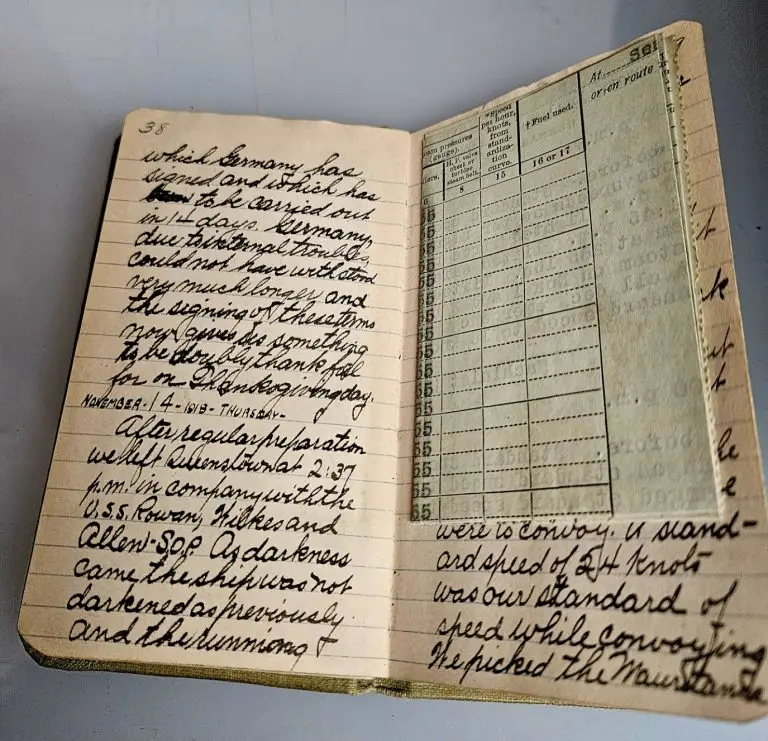
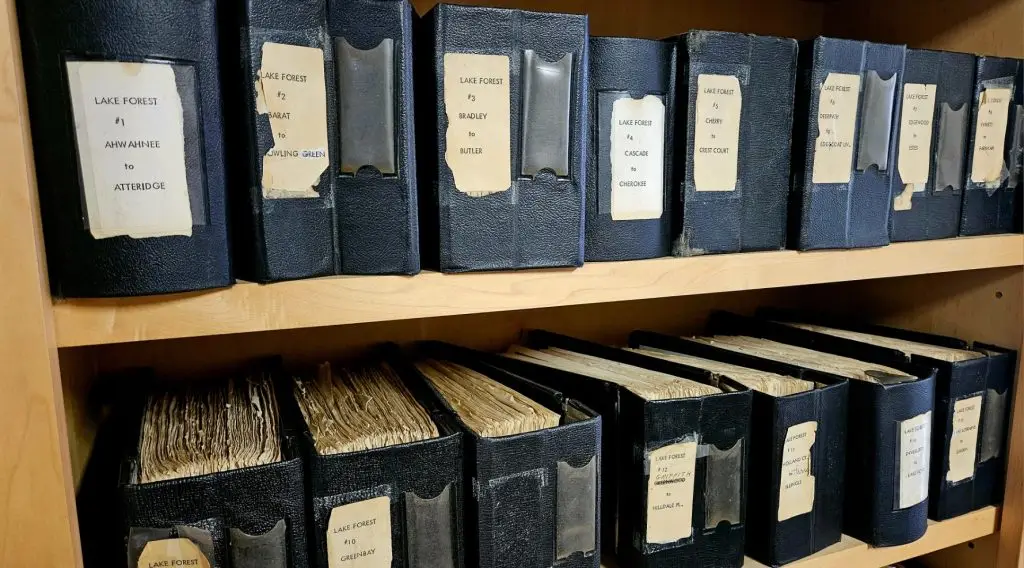
For 54 years, the History Center has safeguarded the documents, photographs, maps, architectural drawings, personal stories, and artifacts that define our community and its distinguished past.
Homeowners researching their properties, scholars studying local history or historical figures, writers and journalists, students learning primary research skills, and families tracing their roots all depend on access to the collections.
As our collections continue to grow in use and importance, so must the archives evolve and harness new technology so that it continues to meet professional archival standards and the expectations of modern researchers. The History Center is undertaking a careful renovation to ensure that this essential facility can responsibly serve and properly represent the community —now and for generations to come.
The Collection
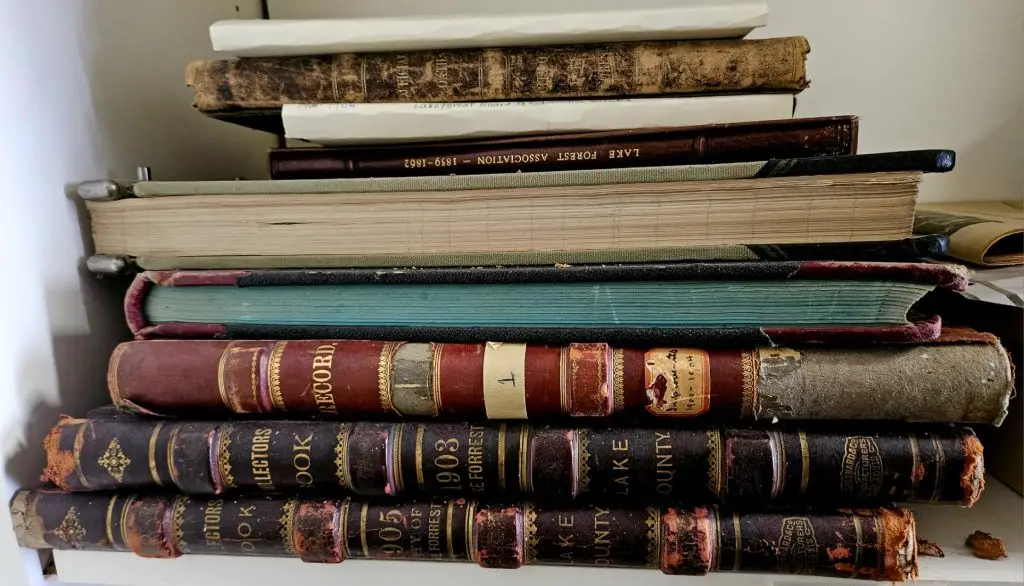
Our wide-ranging collection includes over 50,000 artifacts. We hold thousands of works on paper, leading to endless possibilities for in-depth research: photographs; town records; business and organizational archives and scrapbooks; maps, plats and blueprints; periodicals; local history books and biographies; real estate and house research files; family history albums, diaries, and letters; telephone directories and yearbooks.
Our objects number in the thousands as well, providing diverse material for exploration and exhibition: clothing by local designers, military uniforms and wedding hats; portraits and landscape paintings; products sold at local shops; ephemera from clubs and events; domestic technology from different eras; and more.
New collections come in the door each year, allowing us to tell new stories and reach new audiences. The renovated archives will expand our ability to store these artifacts for future generations of residents, historians, and students of all ages.
Why Renovation is Needed.
In 2022, the History Center completed a nationally funded
Collections Assessment for Preservation (CAP) study. The resulting report identified significant challenges related to preservation, access, and functionality within the existing archives.
Key Issues included
- Environmental conditions need to be updated to meet archival best practices
- Limited work space for researchers and staff
- Inadequate storage for oversized and fragile materials, including rare maps
- Accessibility and circulation challenges for visitors with mobility devices such as wheelchairs
- An aging breezeway with entrances that are physically challenging for our researchers and guests
These concerns affect not only the longevity of the collections but also the experience of everyone who uses them.
More subjectively, the patrons, staff, and board members of the History Center all recognize the current archives facility is not up to the high standards of the community in terms of functionality or appearance.

A Preservation-Minded Approach

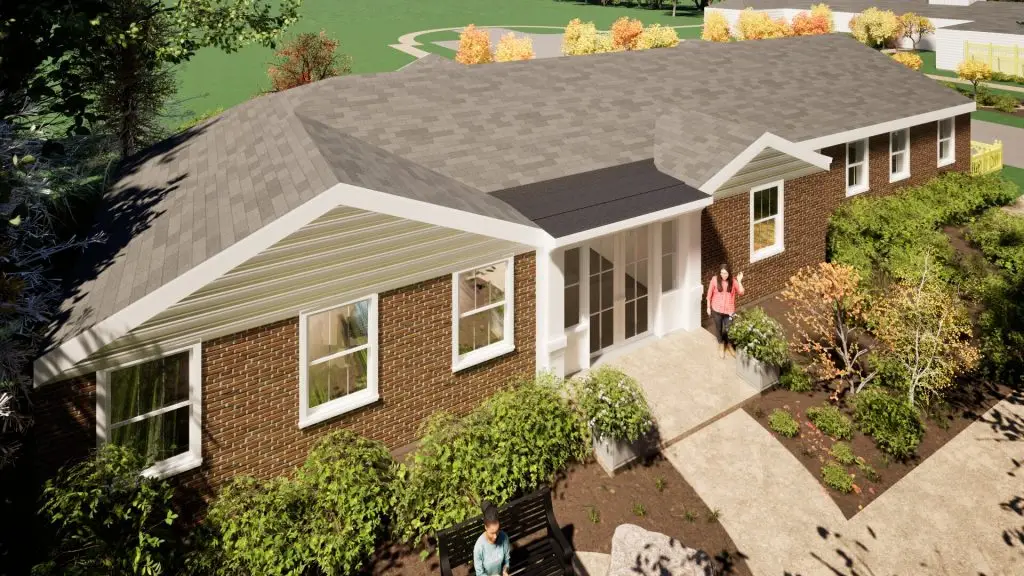
Rather than demolishing the building, the History Center has chosen a responsible, preservation-forward solution: repurposing and renovating the existing structure so it functions effectively while blending seamlessly into the surrounding residential neighborhood.
The Current Plan Includes:
- Renovation of the existing breezeway to improve flow, accessibility, and entry into the research center
- Interior renovations that address archival storage, environmental controls, and research space needs
- Thoughtful design that respects the scale, character, and setting of the neighborhood
This approach allows the History Center to solve the most pressing concerns identified in the CAP study while maintaining the integrity and presence of the existing
building.
Design work is being led by Ryc Loope of Westmoreland Studios, whose experience ensures that the renovation balances historic sensitivity with modern functionality.
What Will the Renovation Achieve?
- Expand archival storage by removing the ceiling in the Archives and Collections Suite, increasing capacity by 38-45%
- Provide appropriate archival storage for manuscripts, photographs, architectural drawings, and historic maps
- Create a fully accessible research and learning environment, with ADA entrance and restroom to accomodate anyone interested in exploring the storied history of our community
- Improve preservation conditions to safeguard irreplaceable materials
- Enhance staff efficiency and volunteer support
- Strengthen the History Center’s ability to support education, exhibitions, and scholarship
- Further improve and complement the aesthetics of the History Center campus


An Invitation to Invest in Stewardship.
This renovation is an investment in preservation, access, and community legacy. Donor support will directly strengthen:
- Collections care and long-term preservation
- Research access for residents, scholars, writers, and students
- A facility that reflects the History Center’s commitment to thoughtful growth and neighborhood harmony
Every contribution plays a role in ensuring that our shared history remains accessible, protected, and actively used.
Stewarding Stories, Shaping Understanding.
The archives are the soul of the History Center—where inspiration is drawn, and the stories of our community are shaped into exhibits, tours, programs, and classroom learning. We invite you to support the Archives Renovation Project and help protect irreplaceable collections while creating a welcoming, accessible space for learning and discovery. Your contribution expands access and deepens understanding for generations to come.
Naming Opportunities by Category
Research Center (Entire Renovation Project)
Exclusive naming opportunity, $1,000,000
Recognition as the lead supporter of the fully renovated Research Center, acknowledged by renaming of the archives with all supporting promotional materials as well.
Research Center Reading Room, $250,000
The primary public space for scholars, students, and community researchers—high visibility and long-term impact.
Archives & Collections Suite, $500,000
Supports the preservation, storage, and care of rare and irreplaceable materials.
East Entry Plaza, $50,000
West Entry Plaza $50,000 (sold)
Reference Desk $50,000
The heart of visitor engagement—where research begins and guidance is provided.
Maps Special Collections Storage $70,000
Specialty archival boxes and storage for rolled materials for our collection of one-of-a-kind maps from 1860-1970, which require extra care in storage to ensure preservation of the oversize materials.
Plats and Blueprints Special Collections Storage $50,000
Climate-controlled space protecting plats, blueprints and architectural drawings.
ADA-Compliant Bathroom $50,000 (sold)
Textiles and Clothing Storage $40,000
Photos Collections Storage $40,000–$50,000- 2 opportunities
Climate-controlled space protecting photographs, slides, and negatives that provide much-used reference materials for researchers, both academic and amateur.
Learning Center $25,000
Dedicated space for visiting researchers, historians, and students.
Reproduction Center $10,000
Dedicated space in the research area for scanning, copying, and printing.
Coffee and Tea Service Area $5,000
Coffee and tea will be available in the research area.
Collections
• House Research $10,000 (four opportunities)
• Family and Genealogy (multiple opportunities) $5,000
• Civic Records (multiple opportunities) $5,000
• Clubs, organization and business records $5,000
Local History Reference Collection $5,000 (four opportunities)
Periodicals Collection (multiple opportunities) $5,000 (1 sold)
News Advertisers, Forest & Bluff Magazine, Sheridan Road Magazine
Frames and Prints Collection (multiple opportunities) $5,000
Memorabilia Collection (multiple opportunities) $5,000
Custom Archival Shelving System $25,000 (multiple opportunities)
Essential storage infrastructure; donors may name individual shelving bays or sections.
Map Storage Cabinets / Flat Files $15,000–$25,000 (per unit or group)
Highly tangible and mission-critical preservation elements.
Research Desks (four available) $5,000
Preservation Storage System for Portraits & Pictures (ten available) $2,500
Research Center Entry & Welcome Area $25,000–$40,000
First impression for all visitors—includes signage and interpretive elements.
Digitization Station (Computer & Software) $30,000 (multiple opportunities)
Scanning of maps, documents and artifacts
Interactive screen (in Learning Center)
$10,000
Interactive digital wall display for use in presentations and exhibit
Portrait Wall Mounting System $10,000
A wall mounting system in the breezeway that will allow the rotation of framed portraits and pictures.
Archival Preservation Fund $2,500–$9,999
Supports conservation supplies, boxes, and ongoing care.
Research Center Founders Circle $1,000–$2,499
Group recognition for donors helping bring the renovation to completion.
Special Research Center Membership $10
Recurring monthly (or $110 yearly) donation with perks including lunch with the Curator, special quarterly discussion groups on specific artifacts.
Recognition Notes
• All named spaces include permanent recognition signage.
• Major donors will be acknowledged in print, digital, and on-site materials.
• Naming opportunities may honor individuals, families, or organizations.
• Opportunities can be pledged over multiple years, where appropriate.
For more information or to reserve your sponsorship, please contact
Lisa Frey